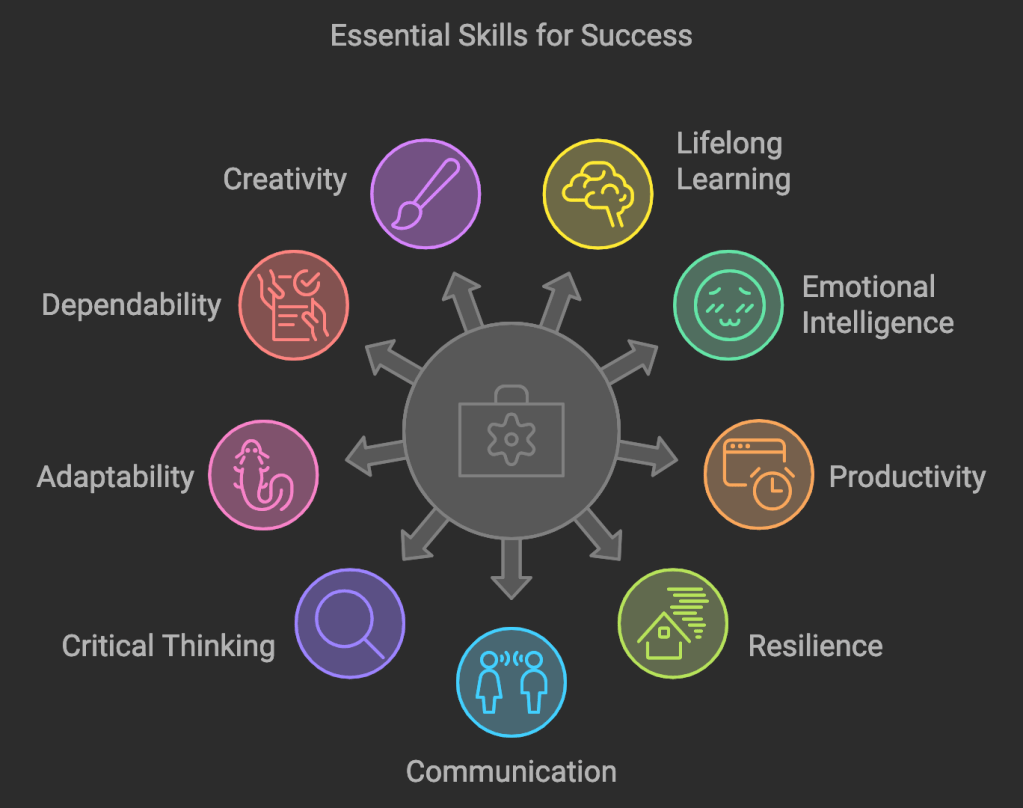
In our modern environment, success hinges on how you tackle challenges, interact with others, and manage yourself. Here are nine fundamental skills that set highly successful people apart from the rest.
1. Commit to Lifelong Learning
Lifelong learning is essential for staying relevant and competitive in a constantly changing world. The most successful individuals never stop learning. They make continuous education a priority by:
- Scheduling dedicated time weekly for exploring new topics — This helps ensure continuous growth and prevents stagnation.
- Engaging with various learning materials (online courses, podcasts, books) — Leveraging a mix of resources keeps learning dynamic and tailored to different learning styles.
- Applying new knowledge to real-world challenges — Practical application solidifies learning and demonstrates its value.
- Sharing insights and experiences with others — Teaching others can deepen your understanding and build strong professional networks.
Daily Action Example: Spend 30 minutes each day reading a book or taking an online course on a topic relevant to your goals.
2. Emotional Intelligence
Success isn’t just about IQ—it’s about EQ too. High achievers excel at:
- Practicing active listening to understand different perspectives — This fosters empathy and ensures effective collaboration.
- Responding thoughtfully rather than reactively — Taking time to respond can prevent misunderstandings and build stronger relationships.
- Reflecting on their emotional reactions daily — This helps in recognizing patterns and improving emotional control over time.
- Managing stress effectively to improve interactions — Stress management is key to maintaining productive relationships and achieving consistent performance.
Daily Action Example: At the end of each day, spend 10 minutes journaling about an emotional reaction you had and how you could improve next time.
3. Productivity
Productivity is a key driver of success, allowing you to make the most of your time and energy. Master the art of getting things done through:
- Making “no” your default response to protect your time — Learning to say no ensures you focus on tasks that truly matter to your goals, but be mindful of saying yes to opportunities that align with your growth and collaboration.
- Using the Eisenhower Matrix to prioritize tasks (Do, Decide, Delegate, Delete) — This method helps distinguish between urgent and important tasks, optimizing productivity.
- Batching similar tasks to minimize context switching — Reducing the number of switches increases efficiency and decreases mental fatigue.
- Maximizing productivity by focusing on what’s truly important — Prioritizing high-impact activities ensures that your efforts produce meaningful results.
Daily Action Example: Use the first 10 minutes of your workday to create a to-do list using the Eisenhower Matrix.
4. Resilience
Build mental and emotional strength through:
- Developing a consistent daily routine — Routines provide stability and help build habits that foster resilience.
- Including mindfulness or physical activity — Practices like meditation or exercise can significantly enhance mental well-being and resilience.
- Viewing setbacks as opportunities for growth — Reframing challenges positively builds strength and perseverance.
- Creating action plans to move forward after challenges — Proactive planning prevents stagnation and builds momentum after difficulties.
Daily Action Example: Incorporate 10 minutes of meditation or light exercise into your morning routine to start your day with a clear mind.
5. Communication
Effective communication is crucial for success:
- Using clear, concise language — Clarity ensures your message is easily understood, reducing the chance of confusion.
- Choosing words carefully to convey ideas effectively — Precise language enhances your credibility and ensures your message resonates with the audience.
- Mastering non-verbal communication skills — Non-verbal skills, such as body language, are crucial in professional settings because they can enhance or contradict verbal communication, making it essential for effective communication.
- Maintaining eye contact and reading body language cues — These skills build trust and help interpret unspoken messages.
Daily Action Example: Practice maintaining eye contact and using open body language during conversations with colleagues.
6. Critical Thinking
Critical thinking is crucial for making informed decisions and solving complex problems. Sharp analytical skills are essential:
- Breaking down complex problems into manageable parts — Dividing problems into smaller pieces makes them less overwhelming and easier to solve.
- Analyzing issues systematically — Structured analysis helps ensure no crucial details are missed.
- Challenging assumptions regularly — Questioning preconceived notions can lead to more innovative and effective solutions.
- Seeking diverse viewpoints to enhance decision-making — Different perspectives can reveal blind spots and contribute to more balanced decisions.
Daily Action Example: Spend 15 minutes analyzing a problem you’re facing and break it down into smaller components to tackle each part individually.
7. Adaptability
Stay flexible in an ever-changing world by:
- Embracing change with an open mindset — Adaptability starts with a positive attitude towards new experiences.
- Exploring new methods and technologies — Staying current with advancements keeps you competitive and capable of innovation.
- Adjusting approaches based on feedback — Adopting a growth mindset helps you see feedback as a learning opportunity, enabling continuous improvement.
- Growing in dynamic environments — Thriving amidst change shows resilience and openness to new opportunities.
Daily Action Example: Identify one new technology or method in your industry each week and spend 20 minutes exploring how it could benefit your work.
8. Dependability
Build trust through reliability:
- Committing to deadlines and following through — Reliability builds trust and demonstrates professional integrity.
- Maintaining consistent work ethic — Consistency is key to long-term success and earning respect.
- Setting clear expectations — Clarity in expectations prevents misunderstandings and ensures accountability.
- Taking ownership of challenges — Taking responsibility demonstrates maturity and leadership.
Daily Action Example: Review your tasks for the day each morning and ensure you have a clear plan to meet all deadlines.
9. Creativity
Foster innovation and fresh thinking:
- Engaging in activities outside your usual routine — Breaking routine can stimulate creative thinking and inspire new ideas.
- Pursuing diverse interests (hobbies, travel, arts) — Varied experiences can provide fresh perspectives and fuel creativity.
- Practicing brainstorming techniques — Brainstorming encourages unrestrained ideation, leading to innovative solutions.
- Using varied approaches to problem-solving — Thinking outside the box helps overcome obstacles that traditional methods can’t solve.
Daily Action Example: Spend 10 minutes each day engaging in a creative activity like sketching, writing, or brainstorming new ideas.
Success results from deliberately practicing these nine skills. The good news is that each of these skills can be learned and improved over time through conscious effort and consistent practice.
Remember that mastery of these skills is a journey, not a destination. Start by identifying which areas you’d like to strengthen and create an action plan to develop them systematically. With dedication and persistence, you can enhance these crucial capabilities and increase your chances of success in both your professional and personal life.
Actionable Summary
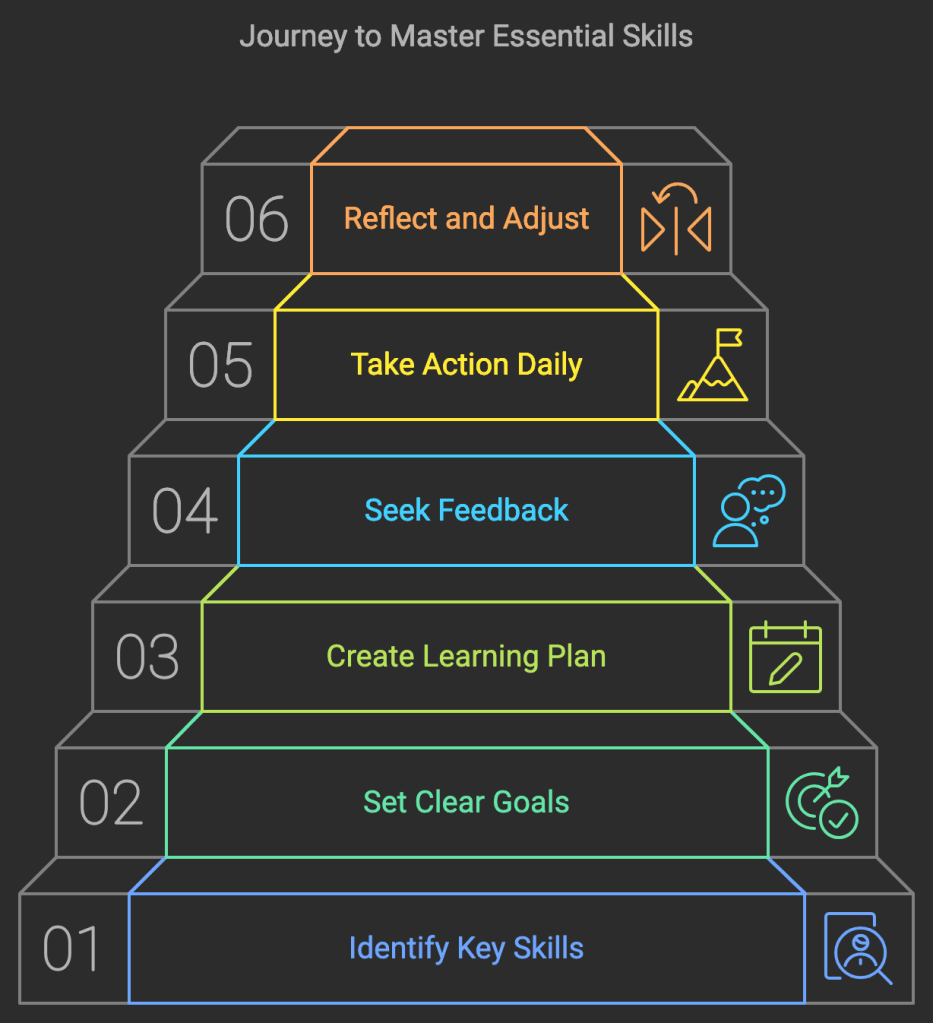
To get started on your journey to mastering these nine essential skills, take the following actions:
- Identify Key Skills to Develop: Reflect on the nine skills and determine which areas need the most improvement.
- Set Clear Goals: Create specific, measurable, attainable, relevant, and time-bound (SMART) goals for developing these skills.
- Create a Learning Plan: Schedule regular time slots to focus on learning, practicing, and applying new skills. Use varied learning materials like books, podcasts, and courses.
- Seek Feedback: Regularly ask for feedback from peers, mentors, or supervisors to track your progress and adjust your approaches.
- Take Action Daily: Commit to small, consistent actions every day to practice each skill. Whether it’s a brainstorming session to boost creativity or practicing mindfulness for resilience, consistency is key.
- Example: Spend 10 minutes each day on a creative exercise or mindfulness practice to develop these habits consistently.
- Reflect and Adjust: Reflect on your progress weekly or monthly and adjust your action plan as needed to ensure continued improvement.
By following these steps, you can actively work towards mastering the skills that contribute to greater success in all areas of your life.
 7 Levels
Leave a comment